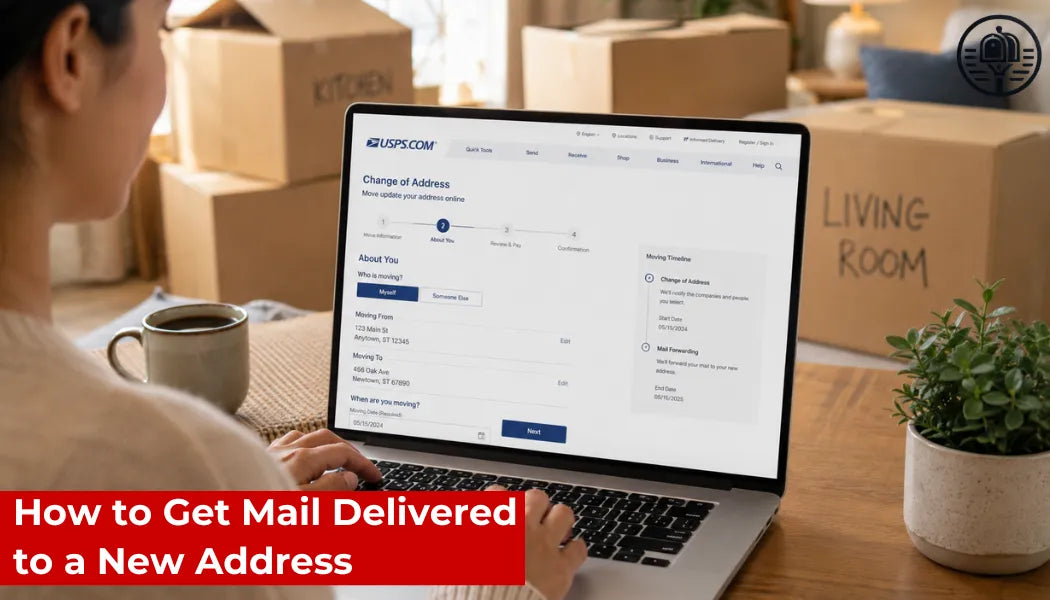
When you move, you don't stop mail — you forward it. USPS doesn't offer a permanent mail stop for residential addresses. What you set up is a Change of Address (COA) that automatically forwards mail from your old address to your new one for 12 months for first-class mail. Setting it up takes 5 minutes online and costs $1.10 for identity verification.
Here's the complete process, what mail forwarding covers, what it misses, and how to make the permanent address change that ends the forwarding period cleanly.
Why "Stopping Mail" Isn't Actually What You Need
The instinct to "stop" mail at your old address makes sense — you don't want your letters piling up somewhere you no longer live. But stopping mail entirely would mean those letters never reach you at all. The correct solution is redirection, not termination.
USPS mail forwarding automatically intercepts mail addressed to your old address and reroutes it to your new one. From the sender's perspective nothing changes — they use your old address and USPS handles the redirect. From your perspective, you receive everything at your new home while you update your address with each sender over time.
The only situation where stopping mail entirely makes sense is if you're leaving a temporary address — a short-term rental, a sublet — where you never intended to receive mail long-term and have no concerns about items sent there.
📬 The official process : USPS Change of Address is filed at moversguide.usps.com — the official portal. The $1.10 fee is identity verification only, not a service charge. Avoid third-party sites that charge $20-40 for the same service. Full details are in USPS Publication 25 — Postal Addressing Standards.
Step 1 — File Your USPS Change of Address
Go to moversguide.usps.com and complete the COA form. You'll need your old address, your new address, the date you want forwarding to begin, and a credit or debit card for the $1.10 identity verification charge.
You can file for an individual (only your mail forwards) or for an entire family at the same address (all mail at that address forwards). If you share a home with unrelated adults, each person needs to file separately.
Processing time : forwarding typically begins 7 to 10 business days after filing online. File before your move date — not after. Mail sent to your old address during the processing gap may not be forwarded.
Confirmation : USPS mails a confirmation letter to both your old and new address. If you receive a confirmation for a COA you didn't file, contact USPS immediately — address fraud is a real risk and this is the early warning system.
What Mail Forwarding Covers — and What It Doesn't
Forwarded for 12 months : First-class mail, priority mail, and first-class packages. This covers the vast majority of what most people receive — letters, bills, financial statements, government correspondence, and standard packages.
Forwarded for 60 days : Periodicals (magazines, newspapers). After 60 days they stop forwarding and the subscription address needs to be updated directly with the publisher.
Not forwarded : Standard mail (advertising, catalogs, bulk mail) — this category is never forwarded. Marketing mail from companies you haven't specifically notified will continue going to your old address indefinitely. Media mail is also not automatically forwarded.
USPS-specific note : Forwarding only applies to USPS mail. FedEx, UPS, and Amazon packages are not covered by a USPS COA — you need to update your address directly with each carrier and each retailer.
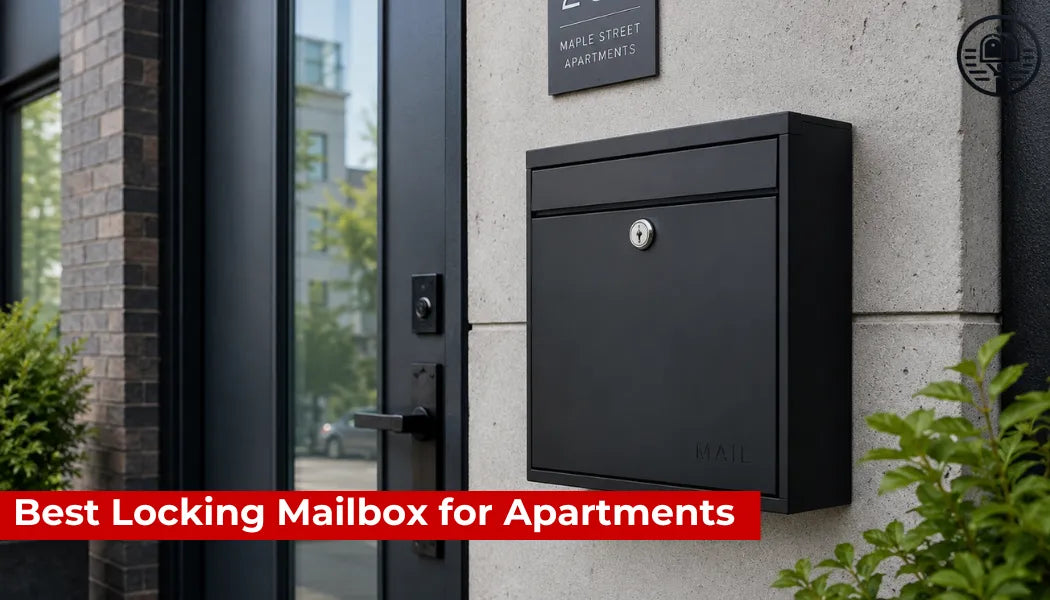
📮 Setting up your new mailbox before the move Your new address needs a compliant, functional mailbox before your forwarded mail starts arriving. If you're installing a new curbside mailbox, USPS requires the bottom to sit 41 to 45 inches from the road surface — see our complete guide on USPS mailbox regulations for the full compliance checklist. Browse our modern mailbox collection for USPS-compliant options shipped directly to your new address.
Step 2 — Update Your Address Directly With Key Senders
Mail forwarding buys you time — it doesn't replace the permanent address update. Every sender whose mail matters needs your new address on file directly. Forwarding ends after 12 months and USPS won't extend it.
Priority updates — do these first : Your bank and credit card issuers, the IRS (via Form 8822 at irs.gov), your state DMV for your driver's license and vehicle registration, your employer's HR department for W-2s and payroll, Social Security Administration if you receive benefits, Medicare or Medicaid if applicable, and your health insurance provider.
Secondary updates : Utility companies at the new address, magazine and subscription services, online retailers (Amazon, major stores) where you have saved addresses, and any recurring delivery services.
The systematic approach : pull 3 months of mail and identify every sender. Update each one. This takes one focused afternoon and eliminates the dependency on forwarding before the 12-month window closes.
Step 3 — Handle Mail That Arrives After You Leave
For mail that arrives at your old address after you've left and before forwarding kicks in, the best approach is to ask whoever occupies the address next — a new tenant, the property owner — to write "Return to Sender — Addressee Moved" on any mail and place it back in the outbox. USPS will return it to the sender who can then update their records.
You have no legal right to have a current occupant handle your mail, but most people cooperate if asked politely before you move out. Leave a note with your contact information so they can reach you if anything important arrives.
For your old mailbox — if you're leaving a rental, the landlord or new tenant will manage it. If you owned the property and it's now sold, your forwarding handles anything sent there during the overlap period.
FAQ
How do I stop mail delivery when I move? You don't stop it — you forward it. File a USPS Change of Address at moversguide.usps.com for $1.10. First-class mail forwards automatically from your old address to your new one for 12 months while you update each sender directly.
How long does USPS mail forwarding last? 12 months for first-class mail and priority mail. 60 days for periodicals like magazines. Standard advertising mail is never forwarded. After 12 months, mail returns to sender unless you've updated your address directly.
How much does it cost to forward mail with USPS? $1.10 for identity verification when filing online at moversguide.usps.com. The forwarding service itself is free. Avoid third-party sites charging $20-40 for the same service.
Does USPS mail forwarding cover packages from Amazon and FedEx? No. USPS forwarding only covers USPS mail. FedEx, UPS, and Amazon packages require you to update your address directly with each retailer and carrier.
How long does it take for USPS forwarding to start? 7 to 10 business days after filing online. File before your move date to avoid a gap in forwarding coverage.
Can I stop all mail from being delivered to my old address? Not through USPS — forwarding redirects your mail rather than stopping it. To prevent mail from reaching your old address entirely, you'd need to update every sender individually and wait for each to update their records.