The best mailbox post for a modern home is a slim steel or aluminum post in matte black or dark gray — minimal profile, powder-coated finish, no ornamental detail. It should complement the clean lines of contemporary architecture rather than compete with them.
Here are the top post styles for modern homes, what materials last longest outdoors, and how to match the post to your mailbox for a coherent curbside look.
Why the Post Matters as Much as the Mailbox
Most homeowners spend time choosing the mailbox and treat the post as an afterthought. From the street, the post is half the visual impact. A well-chosen modern mailbox on a deteriorating wooden 4x4 looks inconsistent — the post undermines the upgrade before anyone even reaches the front door.
The post and mailbox should read as a single designed object from the road. Same finish family, compatible proportions, consistent hardware. When they match, the installation looks intentional. When they don't, it looks assembled from whatever was available.
For modern homes specifically, the post style is more important than for traditional homes — contemporary architecture has no ornamental detail to absorb a mismatched post. Every element is visible and deliberate.
Post Styles That Work for Modern Homes
Slim round steel post — the clean standard A single-diameter round steel post with no decorative fluting or tapering is the default for modern architecture. The circular profile reads as industrial and contemporary — it references utility poles, architectural columns, and modern street furniture rather than Victorian lamp posts. Available in diameters from 2 to 4 inches — 2.5 to 3 inches is the most proportionally appropriate for standard residential mailboxes.
Square steel post — the architectural option A square cross-section post with crisp edges and a flat top plate reads as more explicitly architectural than a round post. Works particularly well for homes with strong rectilinear geometry — flat roofs, large windows, board-and-batten or cement board siding. The flat mounting surface also simplifies mailbox installation — no curved bracket required.
Floating arm post — the statement piece A vertical post with a single horizontal arm extending toward the street, positioning the mailbox away from the post itself. This creates a cantilevered look that references contemporary street signage and urban design. More complex to install but significantly more distinctive than a direct-mount post. Best for modern homes where the mailbox is a deliberate design element rather than a functional afterthought.
Dual post with crossbar — the traditional-modern hybrid Two posts flanking the mailbox with a connecting crossbar creates a more substantial entry point. Can work for modern homes when both posts and crossbar are in the same slim steel finish — avoid ornate scrollwork or traditional decorative elements that conflict with contemporary architecture.
📮 Browse modern post options Our mailbox post collection includes slim steel, square profile, and adjustable arm designs in black powder-coat — all sized for standard USPS-compliant mailbox mounting. Free shipping on all orders.
Materials — What Lasts and What Doesn't
Powder-coated steel — the benchmark The correct material for a modern mailbox post in most climates. Powder coating creates a chemical bond with the steel surface that resists chipping, UV fading, and moisture penetration for years. A quality powder-coated steel post in a moderate climate lasts 15 to 20 years with minimal maintenance. In coastal or high-humidity environments, stainless steel hardware at the ground connection prevents accelerated corrosion at the most vulnerable point.
Aluminum — lightweight and corrosion-resistant Aluminum posts don't rust — relevant for coastal climates where steel corrodes at the base even with powder coating. The tradeoff is structural rigidity — aluminum flexes more than steel under impact, which matters for mailbox posts in areas with significant snowplow traffic or vehicle proximity. Anodized or powder-coated aluminum finishes match steel visually.
Galvanized steel — the utilitarian option Galvanized steel is corrosion-resistant without powder coating, making it appropriate for harsh climates. The silver-gray galvanized finish isn't inherently modern but can work well with the right mailbox — particularly brushed stainless or aluminum mailboxes where the metallic finish is intentional.
Wood — avoid for modern homes Wooden posts are incompatible with contemporary architecture aesthetically and require significantly more maintenance than metal alternatives. They rot at ground level within 5 to 10 years in most climates, lean after freeze-thaw cycles, and need periodic sanding, priming, and repainting. The maintenance burden is inconsistent with the low-effort aesthetic that modern homeowners typically prefer.
Color — Matching the Post to the House
Matte black is the dominant choice for modern homes and for good reason — it reads as deliberate, pairs with virtually every exterior color palette, and doesn't compete with the house for visual attention. It's the default for any modern home with a neutral or dark exterior.
Dark charcoal gray is the alternative when pure black feels too heavy — particularly appropriate for homes with lighter siding where full black creates too much contrast at the property line.
Brushed or satin silver works for contemporary homes with significant metal detail — aluminum cladding, steel window frames, metal roof elements. The post becomes part of a material language rather than a standalone object.
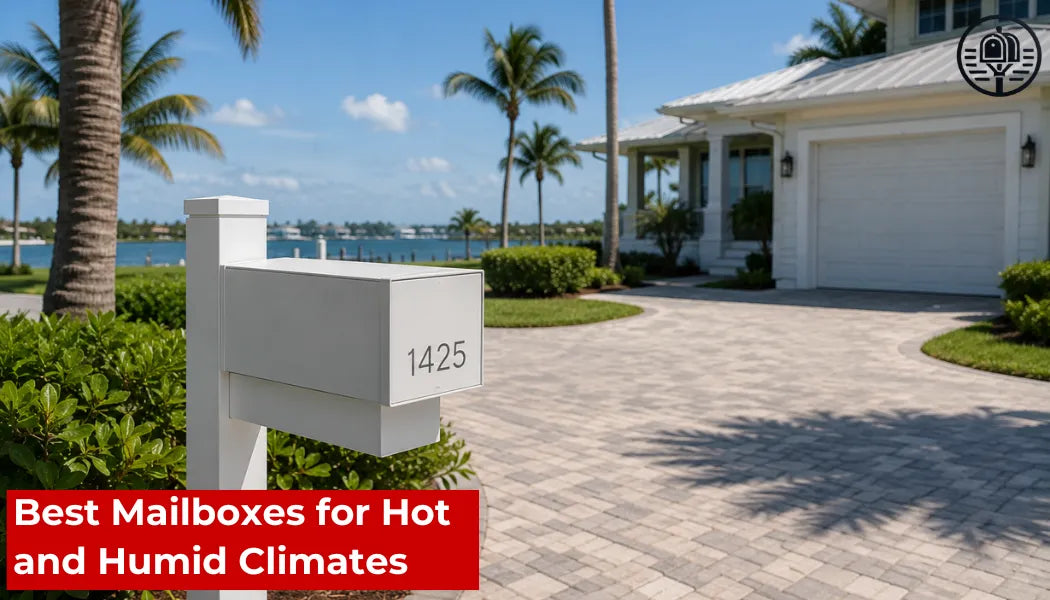
White is appropriate for modern homes with white or very light exterior finishes — a white post and white mailbox against a white facade creates a flush, almost invisible installation that suits minimalist architecture particularly well.
The one consistent rule : match the post finish to the mailbox finish. A black post with a silver mailbox looks unresolved. A black post with a black mailbox looks designed.
Installation Considerations for Modern Homes
Post depth and concrete. A 4-inch diameter steel post needs to be set at least 24 inches deep in concrete to resist movement from wind, snowplow wash, and casual impact. For slim 2.5-inch posts, 20 inches of depth with a concrete footing is the minimum for stability. Mix at least a full 50-pound bag of concrete per post — more in areas with freeze-thaw cycles that heave shallow footings.
Height compliance. Regardless of post style, the bottom of the mailbox must sit 41 to 45 inches from the road surface. Measure before setting the post permanently — adjusting post height after the concrete cures requires starting over. See our complete guide on how high a mailbox should be for the full measurement instructions.
Setback from curb. The front of the mailbox door should sit 6 to 8 inches from the face of the curb. Position the post accordingly before digging — the post typically sits 12 to 18 inches back from the curb depending on the arm length.
FAQ
What mailbox post looks best on a modern home? A slim round or square steel post in matte black powder-coat is the most appropriate for contemporary architecture. Avoid ornate, fluted, or decorative posts that conflict with clean modern lines. Match the post finish to the mailbox finish for a coherent look.
What material is best for a modern mailbox post? Powder-coated steel for most climates — durable, low-maintenance, and available in modern finishes. Aluminum for coastal or high-humidity environments where rust resistance is the priority. Avoid wood for modern homes — it requires too much maintenance and doesn't complement contemporary aesthetics.
How deep should a modern mailbox post be set? At least 20 to 24 inches deep in concrete, depending on post diameter. Deeper is always better in areas with freeze-thaw cycles. Set the post before the concrete cures — adjusting height after is significantly more work.
Should the post match the mailbox? Yes — matching finish creates a coherent designed object rather than an assembly of parts. Black post with black mailbox, silver post with silver mailbox. Mismatched finishes make the installation look accidental rather than intentional.
Can I install a modern mailbox post without concrete? Ground spike anchors exist as a no-concrete option but are not recommended for permanent residential installations — they shift under freeze-thaw cycles and vehicle proximity. Concrete is the correct foundation for any post that needs to hold position for more than one season.
What height should a mailbox post be? The post height is determined by the mailbox height requirement — the bottom of the mailbox must sit 41 to 45 inches from the road surface. Work backward from that measurement to determine your post height based on the mailbox dimensions.