The mailbox may seem like a simple metal box mounted by the road or attached to a wall, but its story spans centuries of innovation, communication, and security evolution. Understanding the complete history of the mailbox reveals how societies adapted to growing communication needs, technological progress, and changing lifestyles.
From ancient courier systems to today’s locking mailboxes and parcel-friendly designs, the mailbox has evolved alongside civilization itself. In this comprehensive guide, we explore how mail delivery began, when mailboxes first appeared, how their design changed over time, and what modern homeowners should know when choosing one today.
By the end of this article, you’ll not only understand the historical journey of the mailbox but also how to select the right style for your home.
Before the Mailbox: Ancient Communication Systems
Long before the invention of the mailbox, civilizations relied on organized courier networks.
Ancient Persia and the Royal Road
Around 500 BCE, the Persian Empire developed one of the earliest structured postal systems. Couriers rode horses along designated routes, delivering messages across vast territories.
The Roman Cursus Publicus
The Roman Empire refined this system with relay stations. Messages were handed off between couriers to speed delivery.
However, in these systems, there was no personal mailbox. Recipients received messages directly from messengers.
💡 Astuce : The concept of private mail delivery required urbanization and stable home addresses.
The Birth of Organized Postal Services
During the Middle Ages, postal systems expanded across Europe. By the 16th and 17th centuries, national postal services emerged in England and France.
Initially, recipients collected mail from central locations such as inns, municipal buildings, or post offices. Home delivery was rare and considered a luxury.
The growth of cities and literacy increased demand for efficient, private delivery systems.
When Did the First Mailboxes Appear?
The first recognizable mailbox designs appeared in Europe during the 18th and 19th centuries.
Early Wall Slots
In urban areas, homes began installing mail slots in doors. This allowed letters to be delivered directly into the house.
Wall-Mounted Boxes
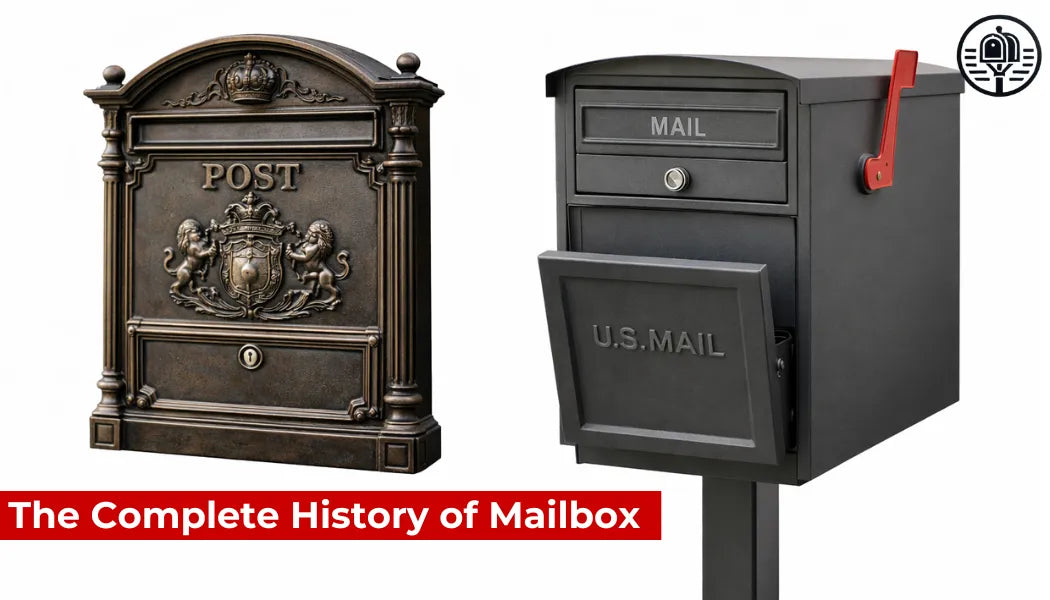
By the mid-1800s, decorative wall-mounted mailboxes became popular in Europe.
⚠️ Attention : Early mailboxes were often unsecured, making theft easier.

The Rise of the Mailbox in the United States
The United States played a major role in popularizing personal mailboxes.
Rural Free Delivery (RFD)
Before 1896, rural residents had to travel to post offices to collect mail. The introduction of Rural Free Delivery changed everything.
Farmers began installing mailboxes along roads so carriers could deliver directly.
Standardization of Designs
In 1915, the U.S. Post Office approved standardized mailbox designs, leading to the iconic curved-top mailbox we recognize today.
The rounded shape helped:
-
Shed rain and snow
-
Increase interior capacity
-
Improve durability
This design remains popular over a century later.
The Evolution of Mailbox Materials
Mailbox construction materials evolved significantly over time.
Early Materials
-
Wood
-
Cast iron
-
Wrought iron
20th Century Innovations
-
Galvanized steel
-
Aluminum
-
Powder-coated metals
Modern Materials
-
Stainless steel
-
Heavy-duty polymers
-
Weather-resistant composites
These materials improved longevity and reduced maintenance.
💡 Astuce : Weather resistance became a priority as mail delivery expanded nationwide.
Security Improvements Over Time
As mail began containing checks, credit cards, and legal documents, security concerns increased.
Introduction of Locking Mailboxes
By the late 20th century, locking mailbox systems became widely available.
These offered:
-
Key-based security
-
Combination locks
-
Reinforced doors
Parcel Delivery Adaptations
With the rise of e-commerce, mailboxes evolved to accept small parcels securely.

⚠️ Attention : Standard mailboxes without locks offer minimal protection against theft.
Mailboxes Around the World
Mailbox design varies by region.
United Kingdom
Often wall-mounted slot systems integrated into doors.
France
Decorative wall boxes common in urban areas.
United States
Freestanding curbside mailboxes dominate suburban neighborhoods.
Japan
Compact, secure wall-mounted boxes common in dense cities.
Cultural architecture influences mailbox style.
The Digital Era and the Mailbox
Despite email and digital communication, physical mail remains essential.
Documents still delivered via mail:
-
Government correspondence
-
Legal documents
-
Financial statements
-
Parcels
The mailbox adapted rather than disappeared.
Modern features include:
-
Anti-pry doors
-
Reinforced locking cams
-
Large capacity for packages
Erreurs fréquentes (Common Mistakes About Mailbox History)
Believing Mailboxes Are Ancient
Mailboxes are relatively recent compared to postal systems.
Assuming All Designs Are Standardized Globally
Standards vary significantly by country.
Ignoring Security Evolution
Older designs lack modern theft protection.
💡 Astuce : Mailbox design reflects social and technological change.
Guide Step by Step: How Mailboxes Evolved
Step 1: Centralized Message Systems
Ancient courier networks.
Step 2: Central Pickup Locations
Post offices became standard.
Step 3: Door Slots
Urban mail slots introduced.
Step 4: Wall-Mounted Boxes
Decorative personal mail storage.
Step 5: Rural Free Delivery
Curbside mailboxes expanded nationwide.
Step 6: Security Integration
Locks and reinforced materials added.
Step 7: Parcel Adaptation
E-commerce drove larger secure designs.

Choosing the Right Mailbox Today
Understanding history helps inform modern purchasing decisions.
When selecting a mailbox, consider:
-
Security level
-
Capacity
-
Weather resistance
-
Mounting style
-
Locking mechanism
Modern Mailbox Options
| Type | Best For |
|---|---|
| Standard curbside | Traditional homes |
| Locking mailbox | Urban areas |
| Wall-mounted box | Compact spaces |
| Parcel mailbox | Frequent online shoppers |
✅ Conseil : Choose a mailbox that matches both your home style and security needs.
How History Influences Modern Mailbox Buying Decisions
The evolution of mailboxes shows a clear pattern:
-
Increased population → higher delivery volume
-
Financial documents → security concerns
-
E-commerce growth → larger compartments
Today’s mailbox must balance tradition and technology.
A decorative vintage-style mailbox may look appealing, but if you live in a high-theft area, a locking model is wiser.
FAQ – The Complete History of Mailbox
When was the first mailbox invented?
Recognizable home mailboxes appeared in the 18th and 19th centuries.
Why are U.S. mailboxes curved?
The curved top sheds rain and increases capacity.
When did locking mailboxes become popular?
Primarily in the late 20th century due to identity theft concerns.
Are mailboxes standardized worldwide?
No, designs vary by country and postal regulations.
Did ancient civilizations use mailboxes?
No, messages were delivered directly to recipients.
How has e-commerce changed mailbox design?
It increased demand for parcel-friendly, secure mailboxes.
Conclusion: A Small Box with a Long History
The complete history of the mailbox reflects humanity’s ongoing need for secure, reliable communication. From horseback couriers to modern parcel lockers, the mailbox evolved in response to changing societies.
While digital communication has transformed how we connect, physical mail remains vital. Choosing the right mailbox today means understanding not only your current needs but also the historical path that shaped modern designs.
Investing in a durable, secure mailbox ensures your mail stays protected while honoring a centuries-long tradition of communication.