Quick Answer : The best mailbox for a farmhouse or rural property is typically a larger-capacity design in black or white powder-coated steel, mounted on a sturdy post that can handle higher wind exposure and less-maintained road edges than suburban settings. Rural properties often have specific route requirements — larger delivery volumes, shared cluster arrangements on some routes, and greater exposure to weather — that make capacity and durability more important than they typically are in suburban installations.
Here's what to consider specifically for farmhouse and rural properties, and how the requirements differ from a standard suburban setup.
How Is a Rural Mailbox Different From a Suburban One?
Rural delivery comes with a few structural differences worth understanding before choosing a mailbox.
Rural Free Delivery (RFD) routes often cover significantly more ground per carrier than suburban routes, meaning your specific address may see less day-to-day route familiarity from substitute carriers, and any compliance or access issue can take longer to notice and resolve simply due to route distance and frequency.
Setback distances can be greater. Rural properties frequently have the mailbox positioned much further from the actual house than suburban homes, sometimes at the end of a long driveway or shared access road — which means the mailbox itself needs to function well as a standalone structure, since checking it multiple times a day isn't always practical.
Wind and weather exposure tends to be higher. Open rural land, without the wind-breaking effect of closely spaced houses and mature street trees, exposes a rural mailbox to more direct wind load than a typical suburban installation — a real factor in both post stability and mailbox door design.
Road maintenance varies more. Gravel roads, less consistent plowing, and rougher road edges are more common in rural settings, which affects both post placement planning and how much clearance you want to build in beyond the standard USPS minimums.
📬 Rural doesn't mean different federal rules
The core USPS height (41-45 inches) and curb distance (6-8 inches) requirements apply the same way on rural routes as anywhere else. What often differs is the practical margin you want to build in — slightly more setback from a gravel road edge than the strict minimum, for example, given rougher maintenance and wider vehicle paths in rural settings.
What Style Works Best for a Farmhouse Aesthetic?
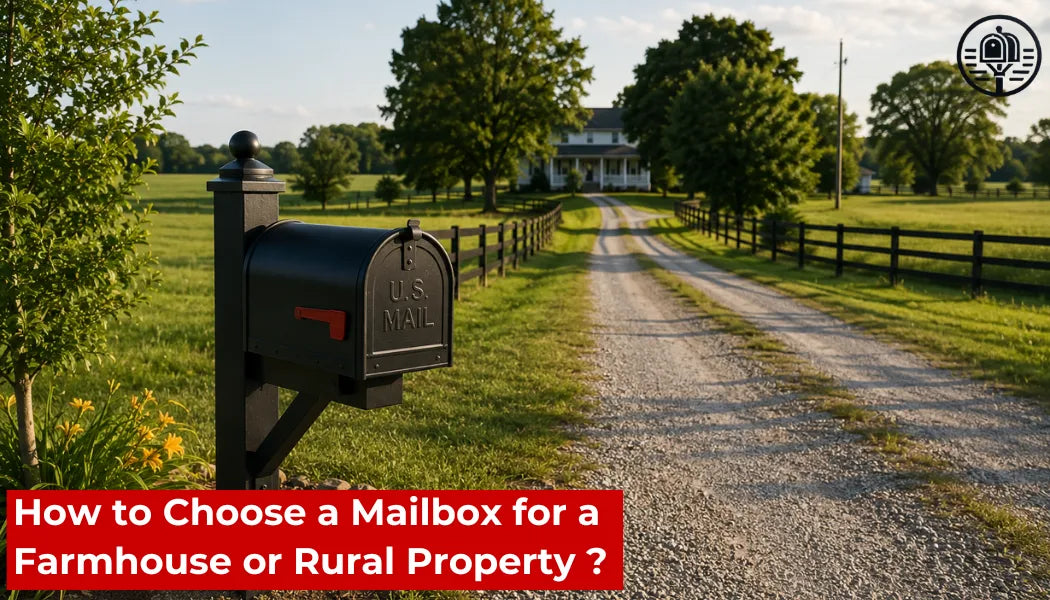
Classic arched or dome-top designs in black or white remain the most common choice for farmhouse-style properties, and for good reason — the traditional silhouette complements board-and-batten siding, wraparound porches, and other farmhouse architectural elements far more naturally than a sharp-edged contemporary box would.
Weathered or textured finishes — a matte black with subtle texture rather than high-gloss, or a finish designed to look intentionally aged — fit the farmhouse aesthetic's general preference for a lived-in, unpretentious look over anything that reads as overly polished.
Larger, more substantial proportions tend to suit rural and farmhouse properties better than the more compact designs common in dense suburban settings — a mailbox that looks appropriately scaled next to a long gravel driveway and open land, rather than one sized for a tight urban lot.
Wood accents on a metal structure — a metal mailbox body with wood detailing on the post, or vice versa — is a common farmhouse styling choice, though pure wood construction has the maintenance downsides covered below.
What Practical Features Matter Most for Rural Properties?
Larger interior capacity. Rural properties are, on average, checked less frequently than suburban ones simply due to distance from the house — mail and packages may accumulate for a day or two between checks rather than being collected same-day. A mailbox with generous interior volume handles this accumulation without overflow.
Durable, weather-resistant materials. Given the higher wind and weather exposure typical of open rural land, powder-coated steel or aluminum construction matters more here than in a moderately sheltered suburban setting — see our guides on modern mailbox materials and, if you're in a particularly demanding climate, our breakdown of the best mailboxes for cold climates.
A sturdy, well-anchored post. Given the wind exposure, this is one setting where investing in a proper concrete footing at appropriate depth pays off more than it might in a sheltered suburban yard. See our complete mailbox installation guide for the full process.
Consider a locking mailbox even in low-traffic areas. It's a common assumption that rural properties are lower-risk for mail theft due to lower foot traffic, and while that's often true relative to dense urban areas, rural mailboxes positioned far from the house — with less passive observation than a suburban box visible from the front window — can actually be more vulnerable in practice, not less. A locking mailbox closes this gap regardless of the general area's crime statistics.
Should I Consider a Shared or Cluster Mailbox Setup?
Some rural developments, particularly newer subdivisions built on previously rural land, use cluster box units similar to suburban multi-unit arrangements rather than individual curbside delivery. If you're building new or moving to a newer rural development, check with your local post office or the developer before purchasing an individual mailbox — you may be assigned to a shared unit rather than needing your own standalone box.
For established rural properties with individual RFD delivery — the more traditional rural setup — a standalone mailbox at your own property line remains standard, and the guidance above applies directly.
🏡 What we'd recommend for most farmhouse properties
A classic black arched or dome-top design in powder-coated steel, on a properly anchored post set to standard or slightly increased depth given wind exposure, with a locking mechanism if the mailbox sits any real distance from the house. This combination handles the farmhouse aesthetic, the practical demands of rural weather and capacity, and reasonable security — without requiring a specialized "rural" product category that doesn't meaningfully exist separately from quality residential options.
What Should I Avoid for a Rural or Farmhouse Property?
Avoid undersized mailboxes chosen for suburban-scale mail volume. If your property is checked less frequently, a compact box designed for daily collection will overflow faster and more often than it would in a suburban setting with same-day retrieval.
Avoid pure wood construction for the primary structure. While wood accents work well stylistically, an all-wood mailbox body faces more weather exposure on an open rural property than in a suburban setting, and rots or warps faster as a result. See the material comparison in our replacement timing guide for the specific lifespan differences by material.
Avoid skipping the locking decision based on assumed low risk. As covered above, distance from the house can offset the lower general risk profile of rural areas — worth a genuine consideration rather than an automatic pass.
Avoid minimal post anchoring given the wind exposure. A post that would be adequately stable in a suburban yard with wind-breaking structures nearby may prove insufficient on open rural land — err toward the more robust end of standard installation guidance.
FAQ
What is the best mailbox for a farmhouse-style home?
A classic black or white arched or dome-top design in powder-coated steel, sized generously for rural mail volumes and mounted on a sturdy, properly anchored post given typically higher wind exposure on open rural land.
Do rural mailboxes have different USPS requirements than suburban ones?
The core federal requirements — 41-45 inches height, 6-8 inches from the curb — are the same everywhere. What often differs is the practical margin worth building in given rougher road maintenance and wider vehicle paths common on rural roads.
Should I get a locking mailbox for a rural property?
Often yes, even though rural areas are generally lower-risk for theft. A mailbox positioned far from the house, without the passive observation a suburban box near the front window gets, can be more vulnerable in practice than the general area's crime statistics might suggest.
What size mailbox is best for a rural property?
Larger capacity than a typical suburban box, since rural properties are often checked less frequently and mail or packages may accumulate for a day or two between visits.
Is wood a good material for a farmhouse mailbox?
Wood accents work well stylistically, but an all-wood primary structure faces more weather exposure on open rural land and tends to rot or warp faster than powder-coated steel or aluminum construction.
Do new rural developments use cluster mailboxes instead of individual ones?
Some do, particularly newer subdivisions built on previously rural land. Check with your local post office or developer before purchasing an individual mailbox if you're in a newer rural development.