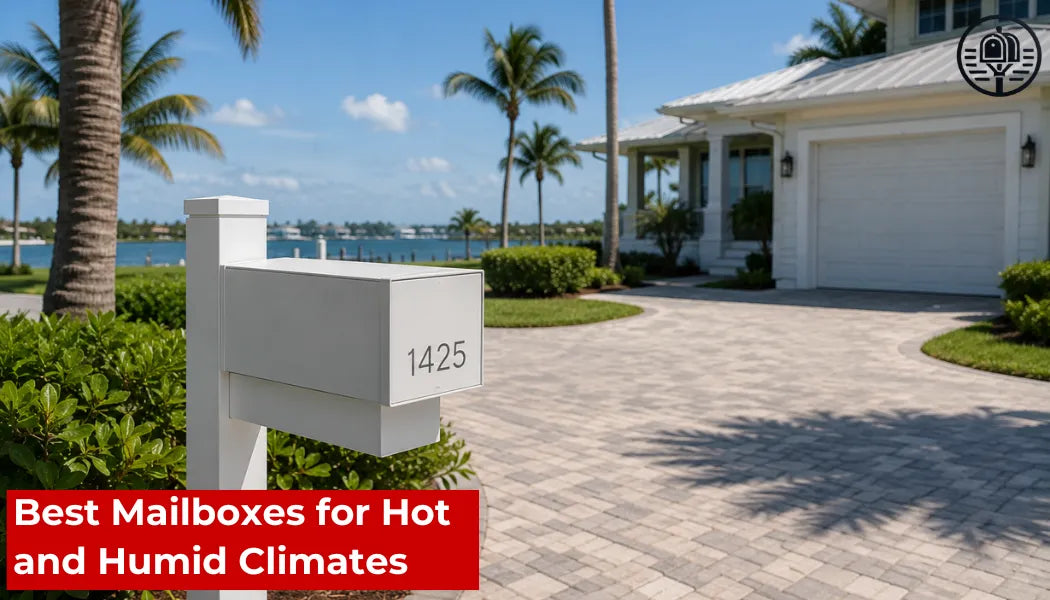
Quick Answer : The best mailbox for hot and humid climates is aluminum or powder-coated steel with a UV-rated finish, ideally with stainless steel hardware if the property is within several miles of saltwater. Standard painted steel and basic plastic are the two materials most likely to fail prematurely in sustained heat, humidity, and coastal salt exposure — showing visible rust, fading, or warping within 2 to 3 years instead of the 10+ years a properly matched material can achieve.
Here's what actually determines mailbox longevity in hot, humid regions like Florida, the Gulf Coast, and similar climates, and how to choose accordingly.
What Makes Hot, Humid Climates So Hard on a Mailbox?
Heat and humidity apply a different combination of stresses than cold climates, but the cumulative damage over a few years is often just as significant.
UV intensity accelerates finish degradation. Sustained high-UV exposure, common across the Southeast and Southwest, breaks down standard paint and plastic significantly faster than in more moderate regions — fading, chalking, and eventual cracking on materials not specifically rated for high UV.
Humidity accelerates corrosion even without direct salt exposure. Sustained moisture in the air, independent of rain, keeps unprotected metal surfaces in a near-constant state of oxidation risk — this is why standard steel rusts faster in Florida than in a drier climate at a similar latitude, even inland.
Salt air compounds everything near the coast. For properties within a few miles of saltwater — the Gulf Coast, most of coastal Florida, and similar regions — airborne salt significantly accelerates corrosion beyond what humidity alone would cause, particularly at joints, screws, and any point where the protective finish has even a small gap.
Heat itself affects plastic and adhesives. Sustained high temperatures can soften or warp lower-quality plastic components and can affect the performance of adhesive-backed decorations or hardware over time.
🌴 Why this climate is genuinely more demanding than most
Florida and the Gulf Coast combine three separate stresses — UV, humidity, and often salt air — that most other US regions face only one or two of at a time. A mailbox that would perform well in a hot-but-dry climate (parts of Arizona, for example) can still fail prematurely here specifically because of the added humidity and salt factors.
What Material Holds Up Best in Hot, Humid Climates?
Aluminum is the strongest single recommendation, particularly for coastal properties. It doesn't rust — full stop — which eliminates the primary failure mode that affects steel in this climate. The tradeoff is a slightly higher price point and marginally less rigidity than steel, which matters little for a curbside residential mailbox under normal use.
Powder-coated steel performs well inland, away from direct salt exposure. The powder coating creates a genuine barrier against humidity that standard paint doesn't match — a quality powder-coated steel mailbox 10+ miles from the coast can perform comparably to aluminum in most non-coastal hot, humid conditions.
Stainless steel hardware matters more here than almost anywhere else. Even with a well-coated mailbox body, standard steel screws and hinges are a common weak point — they're smaller, often less thoroughly coated, and corrode first, sometimes staining the surrounding finish as they do. Stainless steel hardware throughout closes this gap.
Standard painted steel is the material most likely to disappoint. Without a proper powder-coat barrier, standard paint over steel tends to show rust within 18 months to 2 years in coastal Florida conditions specifically — a significantly shorter lifespan than the same material would see in a drier or more moderate climate.
Plastic degrades faster here than almost anywhere in the US. The combination of intense UV and sustained heat accelerates the brittleness and fading that eventually leads to cracking, often within 2 to 3 years rather than the 4 to 5 years plastic might achieve in a more moderate climate.
| Material | Suitability for hot/humid climates | Typical lifespan |
|---|---|---|
| Aluminum | Excellent, especially coastal | 12-20 years |
| Powder-coated steel | Excellent inland, good coastal | 8-15 years |
| Galvanized steel | Good | 6-10 years |
| Standard painted steel | Poor, especially coastal | 2-4 years |
| Plastic | Poor | 2-3 years |
How Close to the Coast Does Salt Exposure Actually Matter?
Within roughly 1 mile of open saltwater, salt air exposure is severe enough that aluminum or marine-grade stainless components are worth prioritizing regardless of budget considerations — standard steel, even powder-coated, often shows corrosion within 1 to 2 years at this proximity.
1 to 5 miles from the coast, salt exposure is meaningfully reduced but still a real factor — quality powder-coated steel with stainless hardware performs reasonably well here, though aluminum remains the more conservative choice.
Beyond 5 to 10 miles inland, salt air is generally not a significant factor, and the primary concerns shift to UV and general humidity rather than salt-specific corrosion — powder-coated steel performs comparably to aluminum at this distance from the coast.
🌊 A simple way to check your own exposure
If you notice visible corrosion on outdoor metal fixtures generally — patio furniture, exterior light fixtures, car trim — faster than seems typical, that's a reasonably good practical indicator that your specific property experiences meaningful salt air exposure regardless of exact distance from the water, and material selection should account for it accordingly.
What Finish and Color Choices Perform Best in This Climate?
Darker colors show UV fading more visibly than lighter ones over time, though this is largely cosmetic rather than functional — a black mailbox will show more visible fading by year 3-4 than a white one, even if both are structurally sound. A UV-rated powder coat significantly narrows this gap.
Glossy finishes tend to show wear and chalking more visibly than matte finishes as UV degradation progresses — a matte or satin finish tends to age more gracefully in high-UV climates, masking early-stage fading better than a high-gloss surface would.
Light colors and whites remain popular specifically for their heat and UV performance in hot climates, beyond just aesthetic preference — they show less visible fading over time and, marginally, don't absorb heat to the same degree as darker finishes.
What Should I Avoid Buying for This Climate?
Avoid unfinished or minimally coated steel entirely if you're within several miles of the coast — this is close to a guaranteed premature rust situation given the salt air combined with humidity.
Avoid budget plastic mailboxes, even though the upfront cost is appealing — the accelerated UV degradation in this climate specifically means a 3 to 5 year expected lifespan elsewhere often compresses to 2 to 3 years here, making the long-term cost comparison favor quality metal even more strongly than in moderate climates.
Avoid mixed hardware — a quality mailbox body paired with standard (non-stainless) screws and hinges creates a weak point that undermines the material choice for the primary structure, since visible rust streaks from corroding hardware are one of the most common early failure signs in this climate.
🏝️ Built for the conditions you're actually facing
Our modern mailbox collection includes aluminum and powder-coated steel options specifically suited to demanding coastal and high-humidity climates, with free shipping to all 50 states — including the regions where material choice matters most for long-term durability.
FAQ
What is the best mailbox material for Florida and the Gulf Coast?
Aluminum is the strongest overall choice, particularly within a few miles of the coast, since it doesn't rust regardless of salt air exposure. Powder-coated steel with stainless hardware performs well further inland.
How long does a standard mailbox last in a hot, humid climate?
Standard painted steel often shows rust within 18 months to 2 years in coastal conditions. Quality aluminum or powder-coated steel with proper hardware typically lasts 10 to 20 years in the same conditions.
Does salt air really make that much difference for a mailbox?
Yes, significantly. Within about a mile of open saltwater, standard steel — even powder-coated — often corrodes within 1 to 2 years, while aluminum or marine-grade stainless components can last well over a decade in the same location.
Should I choose a light or dark colored mailbox for a hot climate?
Light colors and matte finishes tend to show UV fading less visibly over time than dark, glossy finishes, though a quality UV-rated powder coat narrows this difference considerably regardless of color choice.
Is plastic a bad choice for a mailbox in Florida?
Generally yes. The combination of intense UV and sustained heat accelerates plastic degradation faster than in more moderate climates, often leading to visible cracking within 2 to 3 years instead of the longer lifespan plastic might achieve elsewhere.
Does mailbox hardware matter as much as the mailbox body in this climate?
Yes — standard steel screws and hinges often corrode before the main body does, sometimes staining the surrounding finish. Stainless steel hardware closes this gap and is worth prioritizing in hot, humid, or coastal climates specifically.